




Platinum Jubilee Celebration
International Conference on
"Reimagining Governance for Sustainable Futures: Balancing Profit, Purpose, and People in the Age of AI"
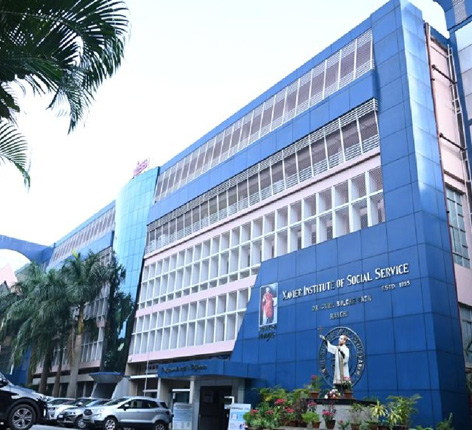
Venue: Xavier Institute of Social Service, Ranchi, Jharkhand, India
Date: 5-7 February 2026
Brochure
🔹 Please make the payment first, then complete the registration form using the same details.



About the Conference
In an era shaped by artificial intelligence, automation, and algorithmic decision-making, the global discourse on governance and leadership is being fundamentally redefined. The challenge before societies, institutions, and corporations today is not merely technological adaptation but ethical transformation— how to align profit with purpose and progress with people.
Reimagining governance in the age of AI requires a holistic rethinking of accountability, inclusivity, and sustainability. The integration of AI into public policy, business strategy, and social systems presents immense opportunities for efficiency and innovation, yet also poses profound questions regarding equity, human dignity, and environmental stewardship.
Rooted in the Jesuit tradition of forming “men and women for others, ” this conference calls for a reexamination of governance and leadership in light of justice, sustainability, and human dignity. The Ignatian vision of discernment and social transformation provides a moral compass to navigate the complexities of AI-driven innovation, economic growth, and ecological responsibility.
As we stand at the intersection of technology and humanity, the challenge is not only to innovate but to do so ethically—to ensure that digital transformation leads to inclusive development, ecological balance, and the common good. This conference seeks to bring together Jesuit institutions, B-schools & higher education institutions, business leaders, scholars, policymakers, and social practitioners to reflect on how governance systems and leadership models can be reimagined to promote sustainable futures for all.
This conference seeks to bring together thought leaders, scholars, policymakers, entrepreneurs, and practitioners to explore pathways for ethical governance and sustainable development in a digitally driven world. Through critical dialogue and interdisciplinary collaboration, it aims to chart a roadmap where human values guide technological advancement, and profit serves the broader purpose of human and ecological well-being.
Special Features of the Conference
SUB-THEMES WITH SUGGESTED TRACKS
Theme 1: Human Capital, Technology, and Organisational Transformation
This track focuses on the future of work and how technology is reshaping organisational design, leadership, and human capital development. It examines how organisations can balance automation and human values to build inclusive, innovative, and ethical workplaces.
-
Reimagining Human Resource Management in the Digital and Inclusive Era
-
The impact of AI and automation on workforce design
-
Human-machine collaboration and learning organisations
-
Talent analytics and performance management in digital workplaces
-
Ethical leadership and emotional intelligence in technology-driven organisations
-
Organisational resilience, culture, and adaptive strategy
-
Employee Experience and Well-being in the Digital Era
-
Sustainability and Green HRM
Theme 2: Inclusive Development, Rural Management Futures, and Technological Empowerment
This track brings together research on how technology and innovation can empower rural and marginalised communities. It focuses on digital inclusion, social entrepreneurship, and sustainable livelihoods that promote both economic and social justice.
-
Digital inclusion and access to technology for enhancing rural livelihoods
-
Sustainable agriculture and natural resource management
-
Social innovation and entrepreneurship for inclusive growth
-
Data-driven rural development and evidence-based policy design
-
Technology-enabled cooperatives and microfinance models
-
Women’s empowerment and leadership
Theme 3: Jesuit Values, Ethics, and Human-Centred Technology
This track reflects on how Jesuit values and Ignatian discernment can guide ethical leadership, governance, and decision-making in the digital age. It explores the intersection of faith, technology, and human development - seeking ways to harness AI and data responsibly for the common good.
-
Education for ethical and adaptive leadership in the AI era
-
Integral human development and sustainability (Laudato Si’)
-
Ethical governance and decision-making in complex digital systems
-
Jesuit humanism, social justice, and digital transformation
-
Technology, ecology, and the moral imagination
Theme 4: Marketing, Technology, and Innovation for Sustainable Growth
This track explores how AI, data analytics, and digital ecosystems are transforming customer engagement, product innovation, and marketing ethics. It invites papers that examine how technology can drive inclusive, sustainable, and human-centred marketing strategies.
-
AI, Automation, and Digital Transformation in Marketing and Retail
-
Ethics, Privacy, and Personalisation in Digital Marketing
-
Green Marketing, Sustainability Communication, and Responsible Consumption
-
Circular Economy and Reverse Logistics in Marketing Strategy
-
Consumer Trust, Value, and Ethical Expectations in Modern Markets
-
Platform Economies and Digital Ecosystems
-
Behavioural Insights, Technology Adoption, and Market Innovation
-
Environmental Impact of Quick Commerce and Impulse Consumption
Theme 5: Finance, Governance, and Digital Transformation
This track investigates how emerging technologies like blockchain, AI, and fintech are redefining financial systems, governance structures, and organisational accountability. It also encourages studies on responsible investment, ESG, and data-driven governance.
-
Digital finance, fintech innovations, and financial inclusion
-
Blockchain in financial governance and auditing
-
AI and predictive analytics for financial decision-making
-
ESG frameworks, sustainability reporting, and corporate transparency
-
Technology-enabled governance and ethical risk management
This overarching theme invites a dialogue that transcends technical expertise, calling instead for ethical discernment, moral courage, and collective responsibility. Through this convergence of faith, reason, and innovation, Jesuit institutions can lead the way in shaping a future where technology serves humanity and governance sustains both people and planet.
Who can Participate
Policy Makers, Academicians, Research Scholars, Industry Professionals, Students, NGOs and Think Tanks among others.
Guidelines for Abstract Submission
-
The title of the manuscript must be clear, concise and in alignment with the theme.
-
The abstract should range from 250 to 300 words.
-
The abstract must include Title, Author(s) Details, and Affiliation with 6-7 Keywords.
-
The abstract must be in Times New Roman, 12-point font size, single-spaced with 1-inch margins all around.
-
The abstract must include the theme of the paper as indicated on the website.
Guidelines for Full Paper Submission
-
Full Manuscript typically ranges from 5000 to 8000 words.
-
Manuscript must be written in APA 7 style.
-
The manuscript must include Title, Author(s) and Affiliation, Introduction, Literature Review, Research Methodology, Findings, Conclusion, Implications, 6-7 keywords.
-
The manuscript must be in Times New Roman, 12-point font size, single spaced with 1- inch margin all around.
-
Each manuscript will undergo through a standard process of review by experts, after which the authors will be notified.
Please email your abstract and final paper draft to: [email protected]
Best Paper Awards
To recognize outstanding scholarly contributions, the conference will present Best Paper Awards in each track.
Awards will be based on:
-
Originality and innovation
-
Relevance to the theme
-
Research rigor and methodology
-
Academic and practical impact
Winners will receive a Certificate of Excellence and will be honoured during the Valedictory Session.
Poster Presentation & Best Poster
The conference will host a dedicated Poster Presentation Session to showcase emerging, innovative, and work-in-progress research.
-
Accepted posters will be printed in physical format and displayed on designated boards at the conference venue.
-
Authors will be assigned a specific time slot to present and discuss their work with judges and participants.
-
Posters will be evaluated by an expert jury based on originality, clarity, research rigor, and presentation.
Best Poster Presentation Award will be conferred during the Valedictory Session.
Poster Presentation Guidelines
-
Poster Size: A0 (33.1 × 46.8 inches), portrait format
-
Structure: Title, objectives, methodology, key findings, and implications
-
Submission: Authors must prepare the poster in the prescribed format and submit the final poster file to the conference organizers.
-
Display: The organising team will print and display the posters on designated boards at the conference venue
Publication Opportunities
-
Selected papers from the conference will have the opportunity to be published in the Jharkhand Journal of Development and Management Studies (JJDMS), a peer-reviewed journal, as per UGC-suggested parameters (previously listed in the UGC Care), ISSN No.: 0973-8444.
-
Authors of the selected papers will be required to follow the journal’s submission and formatting guidelines, which will be shared with them upon selection.
For Registrations fill up: https://forms.gle/W8QtzMVx7uzkqvNYA
Registration fee includes: Pre-Conference workshop, lunch, Dinner, Tea, snacks, and a conference kit.
Registration Details
| Early Bird Registration (Excluding Taxes) | Late Registrations (Excluding Taxes) | |||
|---|---|---|---|---|
| Category | National | International | National | International |
| Research Scholars & Students | 2000 INR | 50 USD | 2500 INR | 60 USD |
| Academicians | 3000 INR | 100 USD | 3500 INR | 120 USD |
| Industry Professionals | 3500 INR | 120 USD | 4000 INR | 150 USD |
| NGO/ Development Sector | 2800 INR | 80 USD | 3000 INR | 100 USD |
| Xavier Association of Management Institutes (XAMI)/International Association of Jesuit Business Schools (IAJBS) | 2500 INR | 70 USD | 2800 INR | 80 USD |
Important Dates
| Abstract Submission | December 5, 2025 |
| Notification of Abstract Acceptance | December 10, 2025 |
| Early Bird Registration | December 15, 2025 |
| Full Paper Submission | December 30, 2025 |
| Notification of Paper Acceptance | January 10, 2026 |
| Last Date for Registration | January 15, 2026 |
| Conference Dates | February 5 to 7, 2026 |
|---|
XISS AT A GLANCE
-
Xavier Institute of Social Service (XISS) was established in 1955 in Ranchi and is now a premier educational institution for business management in India.
-
The institution offers AICTE-approved, NBA-accredited PGDM courses in:
- Human Resource Management
- Rural Management
- Financial Management
- Marketing Management
-
XISS also has a Doctoral Programme known as Fellow Programme in Management (FPM) in the areas of Human Resource, Rural Management, Finance, Marketing, and Strategy.
-
Other courses provided by the institution are:
- Post Graduate Certificate in Geospatial Technology
- Business Analytics for Managers
-
Today, it has a legacy of glory & success of 70 years as a leader in management education, research, consultancy & development interventions.
-
XISS Alumni hold key positions in some of the world's most prestigious private and public sector organizations.

VISION
We envision a centre of academic excellence towards creating a sustainable society with peace, justice and reconciliation.
To create leaders with conscience, compassion, competence, and commitment for sustainable development and empowerment of the marginalised.

MISSION
To become a leading management school in India by offering a portfolio of academic, research, social involvement and outreach programmes.
To create leaders with conscience, compassion, competence, and commitment for sustainable development and empowerment of the marginalised.
Programme Schedule
| Date | Time | Event | Details |
|---|---|---|---|
| Day 0: Wednesday, 4th February 2026 | |||
| 10:00 AM-11:30 AM | Pre-Conference Workshops | Understanding the AACSB Accreditation System and Process | |
| 03:00 PM–05:00 PM | Pre-Conference Workshops | Mastering the Art of Research Paper Writing:
From Concept to Manuscript Publication Strategies for Reputed Journals: Navigating the Path to Acceptance |
|
| Day 1: Thursday, 5th February 2026 | |||
| 08:30 AM-09:30 AM | Registration | ||
| Session 1 | 09:30 AM – 09:35 AM | Inaugural Ceremony | Lighting of the Lamp |
| 09:35 AM – 09:40 AM | Prayer Song | ||
| 09:40 AM – 09:50 AM | Welcome to Dignitaries by Director, XISS | ||
| 09:50 AM – 10:00 AM | Welcome Address & Context setting by Director,XISS - Dr Joseph Marianus Kujur, SJ | ||
| 10:00 AM – 10:10 AM | Chairman's message - Fr. Ajit Kumar Xess, SJ | ||
| 10:10 AM – 10:35 AM | Address by Chief Guest - Mr Prabir Jha, Founder & CEO, Prabir Jha People Advisory | ||
| 10:35 AM – 10:55 AM | Guest of Honour & Keynote Speaker 1-Prof Joseph M Phillips, Dean Emeritus, Prof of Economics, Seattle University, Washington DC, USA | ||
| 10:55 AM - 11:20 AM | Guest of Honour & Keynote Speaker 2 - Mr Pankaj Bansal, Serial Entrepreneur, Investor & Cofounder - CaretCapital & Taggd | ||
| 11:20 AM-11:30 AM | Release of Books/Journals | ||
| 11:30 AM - 11:45 AM | Felicitation of Dignitaries by Director, XISS | ||
| 11:45 AM – 11:50 AM | Vote of Thanks- Dean Academics - Prof Amar E Tigga | ||
| 11:50 AM – 12:15 AM | Group Photography & Tea Break | ||
| Session 2 | 12:15 PM – 01:10 PM | Technical Session I | Track 1: Human Capital, Technology, and Organisational Transformation , Expert Talk by Dr Vinay Ranjan, Director (Human Resources), Coal India Limited |
| Paper Presentations ( 5 papers) | |||
| 01:10 PM – 02:00 PM | Networking Lunch | ||
| Session 3 | 02:00 PM – 03:30 PM | Plenary Session I | Panel Discussion (Moderator - Dr Joseph M Kujur, Director, XISS, Panel Members: Prof Joaquin Garcia Tapial Arregui, Associate Dean, Loyala Leadership School, Spain; Prof Ike Janita Dewi,Universitas Sanata Dharma, Indonesia; Dr Fr Kuruvilla P. - XLRI, Jamshepur, Javier Garcia, Spain) |
| 03:30 PM-03:45PM | Tea Break | ||
| Session 4 | 03:45 PM – 05:15 PM | Technical Session II | Track 2: Inclusive Development, Rural Management Futures, and Technological Empowerment (Expert Talk: Prof Joaquin Garcia Tapial Arregui, Associate Dean, Loyala Leadership School, Spain : Inclusive & Sustainable Development) |
| 05:15 PM-05:45 PM | High Tea | ||
| 6:30 PM-07:30 PM | Cultural Program & Networking Dinner | ||
| Day 2: Friday, 6th February 2026 | |||
| Session 1 | 10:00 AM–11:30 AM | Technical Session III | Track 3: Jesuit Values, Ethics, and Human-Centred Technology, Expert Speaker- Dr Fr.Kuruvilla P., XLRI Jamshedpur |
| 11:30 AM–11:45 AM | Tea Break | ||
| Session 2 | 11:45 AM – 01:00 PM | Technical Session IV | Track 4: Marketing, Technology, and Innovation for Sustainable Growth, Expert Speaker- Ms Ike Janita Dewi, Indonesia |
| 01:00 PM – 02:00 PM | Networking Lunch | ||
| Session 3 | 02:00 PM – 03:30 PM | Technical Session V | Track 5: Finance, Governance, and Digital Transformation |
| Session 4 | 03:30 PM – 04:30 PM | Plenary Session II | General Management & Entrepreneurship, Expert Talk 1: Mr. Javier Garcia - Entrepreneuship & International |
| 05:00 PM – 06:30 PM | High Tea | ||
| 07:00 PM onwards | Director's Dinner | ||
| Day 3: Saturday, 7th February 2026 | |||
| 7th Feb 2026 | 10:00 AM – 10:30 AM | Valedictory Session | Chief Guest's Message - Mr Kulandai Francis, Cofounder & President, IVDP, Tamil Nadu, Masaysay Awardee |
| 10:30 AM – 10:45 AM | Synthesis by Rapoteur Team | ||
| 10:45 AM – 11:00 AM | Tea Break | ||
| 11:00 AM – 12:00 PM | Awards & Certificate Distributions | ||
| 12:00 PM – 12:10 PM | Vote of Thanks | ||
| 12:10 PM – 12:30 PM | Group Photography at XISS Courtyard | ||
| 12:30 PM-01:30 PM | Lunch | ||
About Jharkhand and places to visit
Located in the eastern part of our subcontinent, Jharkhand, literally meaning “Land of Forests ” is home to one of India ’ s richest flora and fauna. Its sobriquet amply justifies the presence of such a diverse ecosystem. Jharkhand was carved out of the southern part of the state of Bihar in 2000 and is situated on the Chota Nagpur plateau which gives this region its distinct landscape. Home to many rivers, scenic waterfalls, hill stations, old temples, and rich culture, there are loads of activities to do in Jharkhand to acquaint you with the magical experiences hidden up its crevices.
Ranchi, the capital city of Jharkhand offers startling richness and diversity of experience. It is located at an altitude of 2,140 feet in the valley of Chotanagpur. Ranchi has an undeniable charm and its famous waterfalls, verdant hills and forest are excellent spots for photography and other recreational activities. This innovative city is impressively diverse. As compelling as the capital can be, come, spend a few days at Ranchi. Getting around is incredibly easy via well-connected road and air routes.